










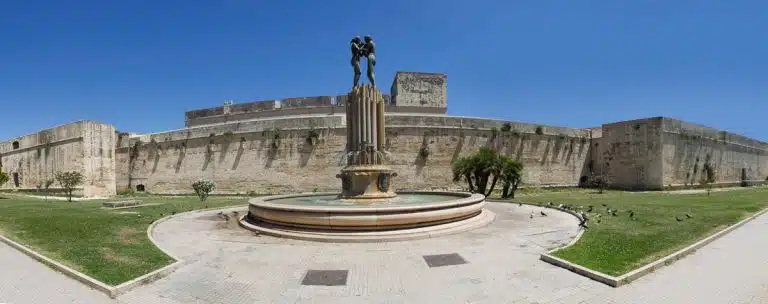
Emperor Charles V of the Habsburg dynasty issued a decree in 1539 to build the fortress, using the modern military architecture techniques of that era. The planning and construction were entrusted to Gian Giacomo dell’Acaya, a military man and chief engineer of the Kingdom of Naples. The outer structure was built between 1539 and 1549.
The castle did not serve purely defensive purposes; in the 18th century, one of its rooms was even used as a theater. Its structure is square, with four corner watchtowers—typical of many fortresses of the time.
The castle is located along a major route that was vital from the Roman Empire through the Middle Ages: the road to the port of Lecce. Today, the castle is fully restored and open to the public. It hosts a museum dedicated to papier-mâché art (Cartapesta), as Lecce became one of the main centers for this craft in the 18th century.