









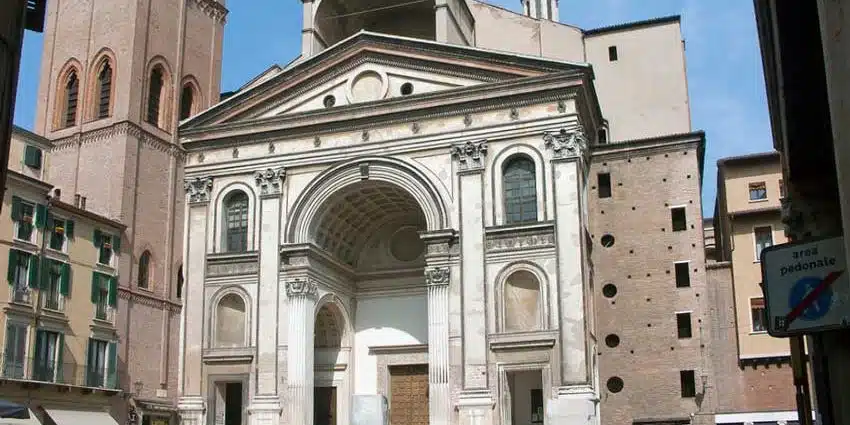
The basilica is one of the masterpieces of Renaissance architecture.
Its construction was commissioned by Ludovico III Gonzaga in 1472, based on the designs of Leon Battista Alberti. The construction was only completed 328 years later.
The church façade prominently features classical elements: a temple front, a triumphal arch, and the basilica form.
The church was intended to receive pilgrims coming to see the vial believed to contain the blood of Christ, which is kept in a crypt beneath a hole in the floor located directly under the dome.
The relic, known as Preziosissimo Sangue di Cristo (“The Most Precious Blood of Christ”), was brought to the city by the Roman soldier Longinus, who is said to have collected drops of Jesus’ blood from the ground at the foot of the cross.
To ensure that all worshippers could see the sacred relic, Alberti designed the church without supporting columns.
This created a single large nave covered by an impressive barrel vault.
The church walls are painted to create the optical illusion of stone paneling.